
Kun-ya: From Royal Betel Boxes to Roadside Stalls
A gold betel box once formed part of a king's regalia. Today the same habit survives in a folded leaf sold from a roadside stall — a custom that runs from palace ceremony to everyday hospitality, with real costs of its own.
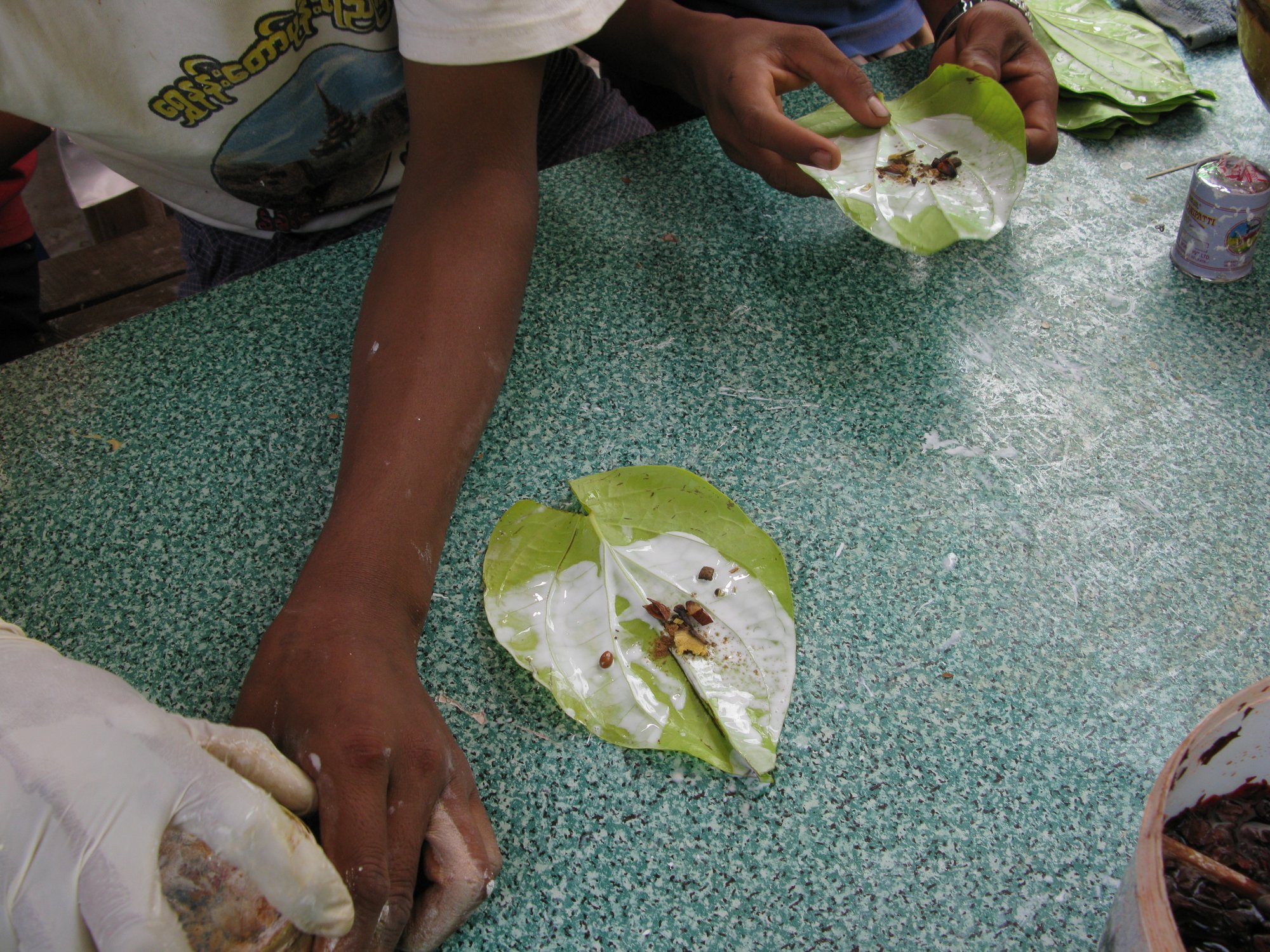
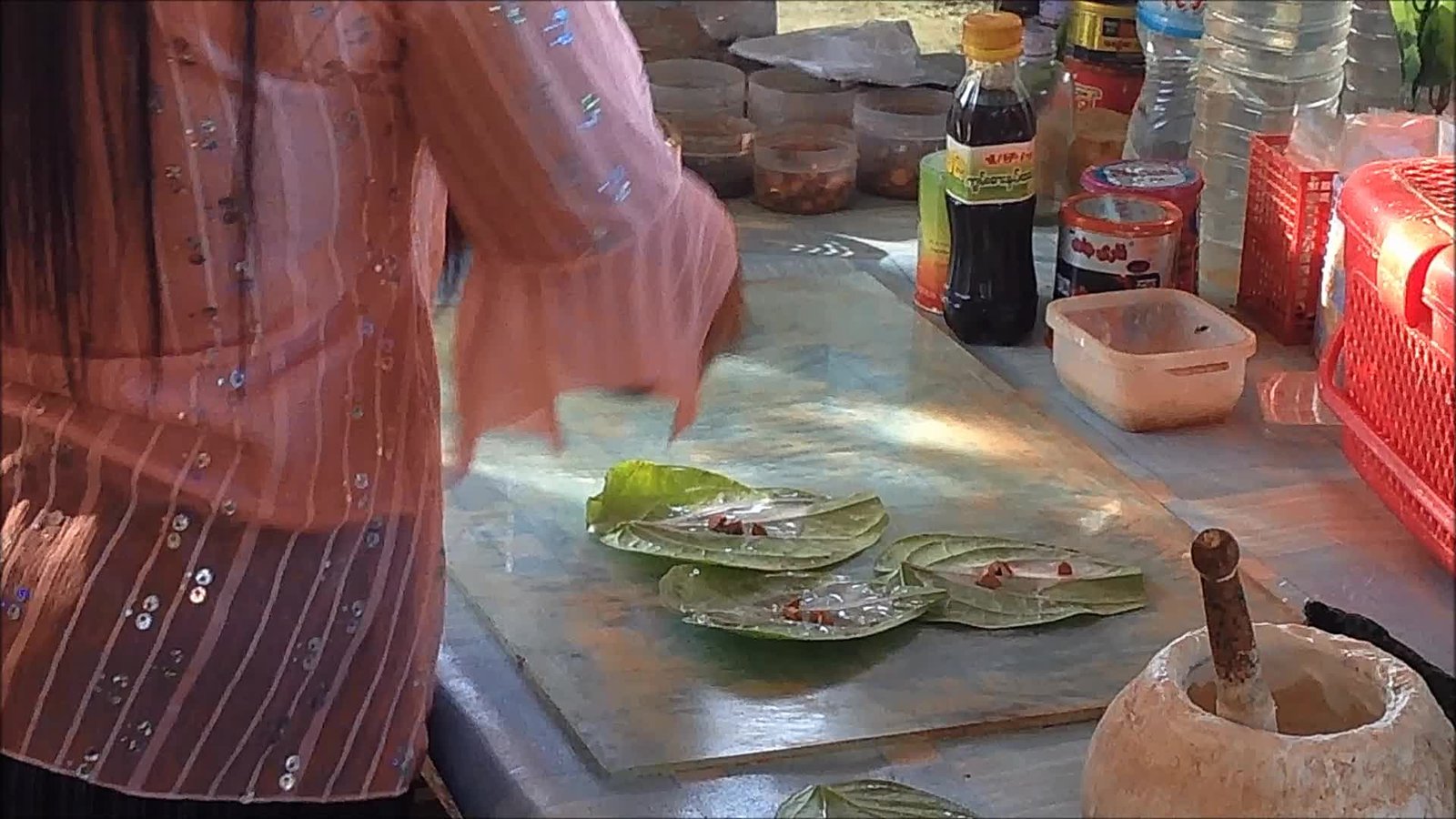
A stack of green leaves, small containers of ingredients and a seller folding one parcel after another. A kun-ya stall takes up little space, but its place in Myanmar’s everyday life is easy to recognise.
Customers stop for a small packet before continuing their journey or returning to work. Some ask for a particular mixture; others have a familiar order. Around these stalls, a long-established social habit meets the ordinary business of earning a living.
Known in English as betel quid, kun-ya has connections to hospitality, royal customs and companionship. Its story also includes stained streets and serious health risks. Both deserve a place in an honest account of this familiar daily habit.
What is inside the folded leaf?
Although people often call it “betel nut chewing,” the leaf and the nut come from different plants. Betel leaves grow on a vine, while the ingredient commonly called betel nut is areca nut, from the areca palm.
A typical quid combines pieces of areca nut with slaked lime paste, wrapped in a betel leaf. Tobacco is often added, along with other flavourings according to personal preference. Here, “lime” means a calcium-based substance, not the citrus fruit.
At a stall, the preparation follows a repeated sequence: a leaf is spread out, the ingredients are added, and its edges are folded into a small parcel. Vendors adjust mixtures for their customers, and the finished packets are carried away for use during the day.
From the royal court to the household
Long before the roadside stall, betel had a place in Myanmar’s royal court. Historical research records royal pages serving as bearers of the royal betel box and water jug. These were recognised duties within palace service, showing how closely the custom was woven into royal life.
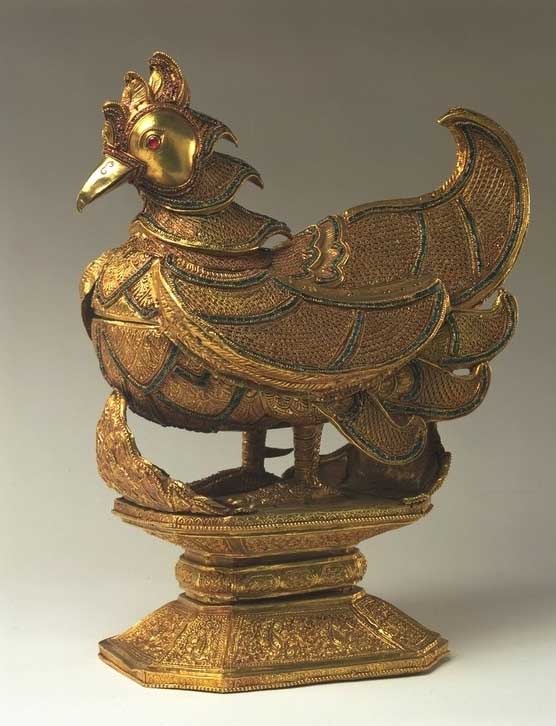
The containers could be remarkable works of craftsmanship. A gold and jewelled betel container associated with King Thibaw, Myanmar’s last monarch, survives in the Victoria and Albert Museum in London. Shaped like a mythical karaweik bird, it formed part of the royal regalia, combining a practical purpose with a display of royal wealth and status.
Betel receptacles were made in many forms, using materials ranging from bamboo and lacquer to silver and gold. Their designs and materials could reflect the owner’s social position, with certain forms associated with royalty and court officials.
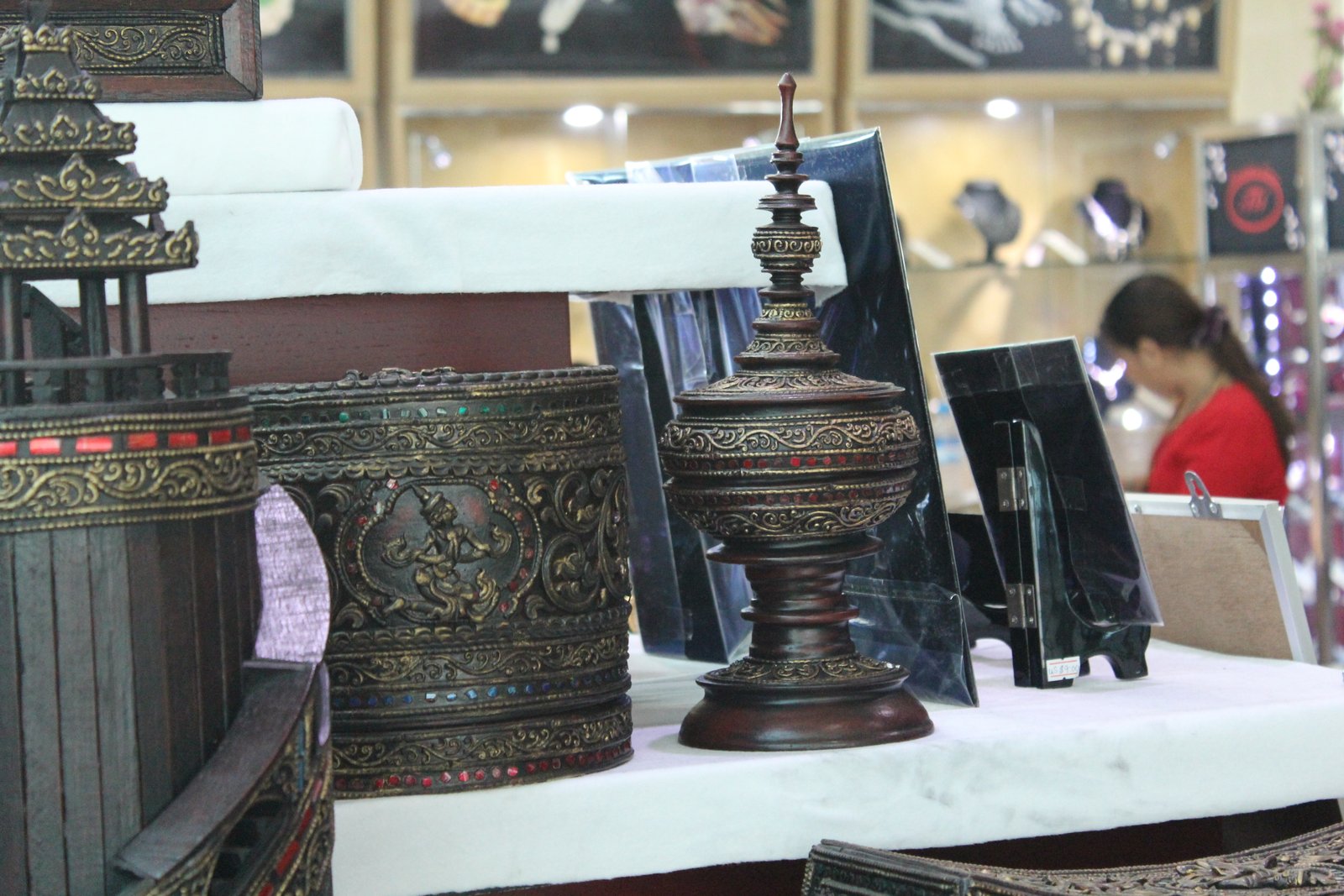
In households, the familiar kun-it (ကွမ်းအစ်), also written as kun eit, was often a cylindrical lacquerware box with a fitted lid and removable trays. The trays kept areca nut, lime, spices and tobacco organised, while a lower compartment held the betel leaves. Bringing out the box allowed guests to prepare a quid according to their preference. The National Gallery of Victoria compares its place in Burmese hospitality to that of a tea or coffee service.
A gesture of welcome
Offering betel to guests has long been associated with hospitality in Myanmar. It has also appeared at ceremonial occasions, including weddings. The household betel box was therefore both a useful container and part of the way visitors were welcomed.
That history helps explain why chewing can feel ordinary to people who grew up around it. Something offered during a visit or shared among acquaintances can become part of how people spend time together.
The custom extends beyond Myanmar. Related preparations are found across South and Southeast Asia, with different names and ingredients. Kun-ya is Myanmar’s local expression of this wider regional practice.
A small break in a demanding day
For some chewers, kun-ya is closely connected with work and the company they keep. Research among men in Mandalay, published in 2015, found that friendship groups and working environments could influence the habit. Some participants associated chewing with staying alert and coping with demanding work. These were their reported experiences, rather than evidence of a health benefit.
For someone working outdoors or doing hard physical labour, a packet of kun-ya may represent a small pleasure during a tiring day. It can accompany a pause between tasks or a conversation with colleagues. What begins as an offer from a friend can become something repeated almost without thinking.
This helps explain why the habit can be difficult to leave behind. It is tied to familiar people, places and routines, as well as dependence. Yet not everyone in Myanmar chews kun-ya. National survey findings show differences between men and women and across social groups. A familiar street scene should not be mistaken for a habit shared by the whole population.
The marks left on the street
The habit also has a visible effect on shared spaces. Spitting the reddish liquid produced by chewing kun-ya stains roads, pavements and walls. These marks make streets look dirty and add to the work of keeping public places clean.
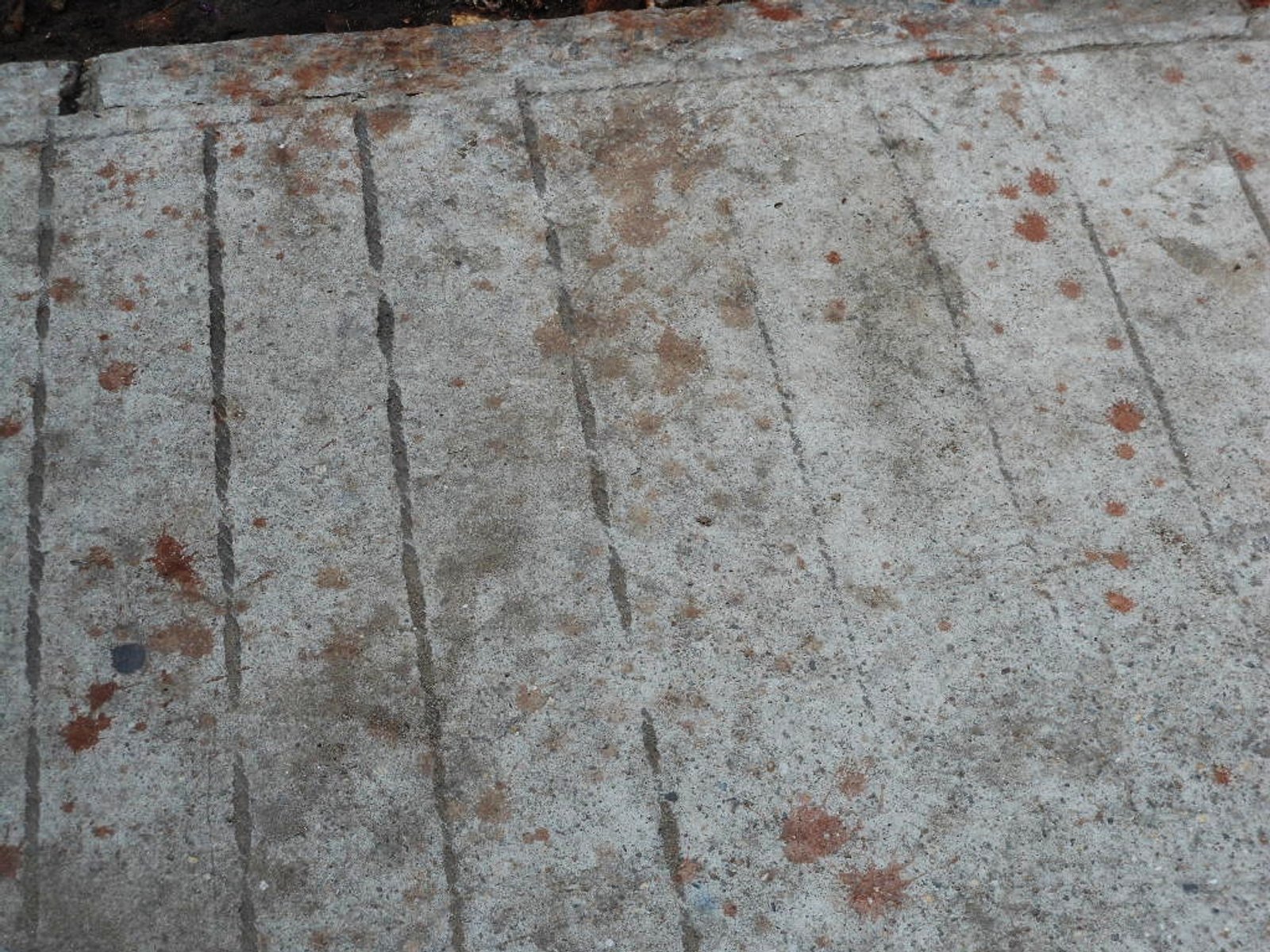
Some premises display notices asking people not to spit betel juice. These signs reflect an everyday tension: what feels like a personal habit can become someone else’s cleaning task. Its effects extend to shopkeepers, neighbours and everyone using the same space.
A familiar pleasure with a serious cost
The health consequences are more serious than the stains. The International Agency for Research on Cancer, part of the World Health Organization, classifies areca nut and betel quid, both with and without tobacco, as carcinogenic to humans. Removing tobacco does not make an areca-containing quid safe.
Research in Myanmar also describes dependence and the difficulties of stopping when chewing is embedded in everyday routines and social life. Understanding those circumstances matters when discussing the practice and the people who chew.
From a royal container to a household lacquer box and a small roadside packet, kun-ya has occupied very different places in Myanmar society. It continues to offer some people a familiar break in a demanding day. But that pleasure comes with costs, from stained surroundings to serious harm to oral health. Its long history helps explain its place in everyday life, without making those consequences any less real.
Updated 10 November 2026.
Sources
- Papke et al. — Betel Nut (areca) and Smokeless Tobacco Use in Myanmar
- Moe et al. — Yauk gyar mann yin (Be a Man!): Masculinity and betel quid chewing among men in Mandalay, Myanmar
- Tobacco use and betel quid chewing among adults in Myanmar: estimates and social determinants from demographic and health survey, 2015–16 (BMC Public Health, 2021)
- WHO/IARC — IARC Monographs Programme finds betel-quid and areca-nut chewing carcinogenic to humans (2003)
- Toe Hla — Money-lending and Contractual Thet-kayits in the Konbaung Period (royal betel-box and water-jug bearers, p. 141)
- Victoria and Albert Museum — betel container of King Thibaw
- Dr Yi Yi — Betel Receptacles (Burma Library)
- National Gallery of Victoria — Betel-box (Kun-it)